Community Centre Feasibility Study

Share Community Centre Feasibility Study on Facebook Share Community Centre Feasibility Study on Twitter Share Community Centre Feasibility Study on Linkedin Email Community Centre Feasibility Study link
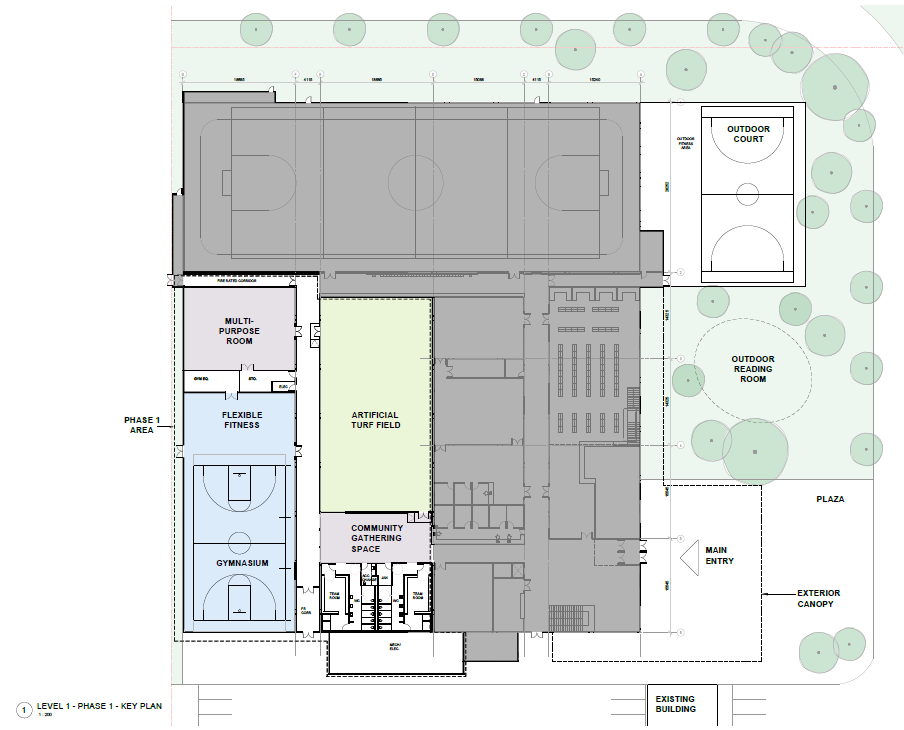
site and public amenity building preliminary concept

Culture, recreation and sport services greatly enhance community members' quality of life, promote personal health, and foster social connectivity. These facilities also drive tourism and economic growth. In 2023, community engagement and research conducted for the Sport and Recreation Needs Assessment identified demand for new and improved indoor amenities to accommodate structured and spontaneous activities for a growing population.

The District of Lake Country acquired a cold storage facility next to the Winfield Arena that is planned to be retrofitted into a community facility. The location of the building and site next to the Winfield Arena presents an opportunity to create a multi-use ‘hub’ that can meet identified and future needs for a variety of community purposes.

The District is undertaking a Community Centre Feasibility Study to ensure that next steps and investments into the site are guided by sound information and a clear understanding of opportunities, needs, benefits, and resource requirements. The study is being undertaken in two phases.

  • Phase 1 involves engagement with the community and other research to explore potential best uses for the site.
  • Phase 2 translates the Phase 1 findings into conceptual options with high level capital and operating costs.

Engagement with community groups and organizations that provide programming, use facilities and organize events is an important aspect of the project.

NOVEMBER 2025 UPDATE

The Phase 2 report is now available for review here. This document translates the Phase 1 findings into conceptual options with associated cost impacts identified. The second phase of the study built on the analysis of community need and demand by applying a viability lens to the potential spaces that considered additional factors such as technical feasibility, space synergies, existing building conditions, and phasing. The feasibility study will ultimately be used by the District to support future decision making, partnership discussions, and resourcing decisions.

The space program identified in this Phase 2 report suggests a focus on the following primary core spaces:

  • Turf field with elevated walking track
  • Library
  • Gymnasium
  • Flexible Fitness and Recreation Areas
  • Arts and Culture Dedicated Spaces (including display, exhibition, maker, and support areas)
  • Community Meeting Space

The above noted spaces meet the criteria for community need, benefits, and are viable within the existing facility conditions. While other types of recreation facilities (e.g. arena, pool, etc.) have strong demand and benefits rationale, they are not deemed as a viable fit for the community centre retrofit based on existing conditions and infrastructure needs. As such, these spaces should be further explored and potentially developed as new build projects.

The estimated capital cost for the full facility build-out is $63,589,107 (Class D estimated; +/- 30% 18 times out of 20). Should the District decide to phase the project, the following capital costs are estimated to apply to the following three phasing clusters:

  • Arts and culture, library, lobby, and administration space: $23,587,444
  • Gymnasium, flexible fitness and recreation space, community meeting space, food and beverage, and storage: $28,313,155
  • Turf field with track: $11,688,508

Operational cost analysis reflects that the facility could operate at close to a break-even position, but may require some level of subsidy. The ability of the facility to secure lease arrangements and attract rental groups will be key variables impacting future revenues and the overall level of subsidy required.

Updates to both the estimated capital and operating costs should be undertaken on a move forward basis as decisions are made on phasing, potential partnerships, and lease agreements with prospective tenants.

JUNE 2025 UPDATE

The Phase 1 report is now available for review here. Highlighted below are several key conclusions from the initial phase of the study. These conclusions reflect key takeaways from the research and engagement contained in this Phase 1 report that will require further exploration through the options identification and analysis that will be undertaken as part of the second phase of the study.

  • The Lake Country Museum & Archives and Lake Country Art Gallery have outgrown their current spaces. Having access to larger and more optimal spaces at the community centre could enable these groups to grow programming, events, and better meet their mandates.
  • There is a general need for flexible and adaptable space for events, exhibits, art studio / maker purposes, and meetings / seminars. The conditions and configuration of the current facility are well suited to meet many of these needs in the short-term.
  • Based on available benchmarks, Lake Country is deficient in library space. The evolving and diversifying service needs of libraries along with projected population growth is likely to further stress the current library space in the coming years. A new library of between 9,000 – 16,000 sq.ft. should be explored. Co-locating a library with other recreation and cultural amenities also presents an opportunity for space and programming synergies.
  • Review of market supply, trends, and the community engagement support the benefits of including large span multiuse space in the facility. This could include a turf field and/or court space. Further exploration is required through Phase 2 on how this space could be configured within the facility.
  • Community demand for indoor aquatics in Lake Country was reiterated through the engagement. Phase 2 of the study will need to further investigate whether a pool is technically and financially viable as part of this project.
  • Indoor training space for groups using the adjacent arena is limited. The existing facility conditions are well suited to easily fitting up for dry-land training and skills training purposes.
  • Residents and community groups are excited about the possibility of the new community centre becoming integrated into a “campus” site that is interconnected with existing indoor amenities, quality new outdoor space, and future residential development in the immediate vicinity of the facility.

While this Phase 1 Report focuses on community need and opportunity identification, several key planning considerations and factors will ultimately impact the potential uses of the facility:

  • Technical viability of renovations or retrofits within the current infrastructure conditions.
  • Cost (capital and operating).
  • Risk profile of different space uses.
  • Potential opportunities and synergies with adjacent facilities and future development.
  • Partnership opportunities (relating to both space use and fundraising).

These considerations and factors will require further exploration through Phase 2 of the study and subsequent partnership exploration and planning undertaken by the District subsequent to this study.

Culture, recreation and sport services greatly enhance community members' quality of life, promote personal health, and foster social connectivity. These facilities also drive tourism and economic growth. In 2023, community engagement and research conducted for the Sport and Recreation Needs Assessment identified demand for new and improved indoor amenities to accommodate structured and spontaneous activities for a growing population.

The District of Lake Country acquired a cold storage facility next to the Winfield Arena that is planned to be retrofitted into a community facility. The location of the building and site next to the Winfield Arena presents an opportunity to create a multi-use ‘hub’ that can meet identified and future needs for a variety of community purposes.

The District is undertaking a Community Centre Feasibility Study to ensure that next steps and investments into the site are guided by sound information and a clear understanding of opportunities, needs, benefits, and resource requirements. The study is being undertaken in two phases.

  • Phase 1 involves engagement with the community and other research to explore potential best uses for the site.
  • Phase 2 translates the Phase 1 findings into conceptual options with high level capital and operating costs.

Engagement with community groups and organizations that provide programming, use facilities and organize events is an important aspect of the project.

NOVEMBER 2025 UPDATE

The Phase 2 report is now available for review here. This document translates the Phase 1 findings into conceptual options with associated cost impacts identified. The second phase of the study built on the analysis of community need and demand by applying a viability lens to the potential spaces that considered additional factors such as technical feasibility, space synergies, existing building conditions, and phasing. The feasibility study will ultimately be used by the District to support future decision making, partnership discussions, and resourcing decisions.

The space program identified in this Phase 2 report suggests a focus on the following primary core spaces:

  • Turf field with elevated walking track
  • Library
  • Gymnasium
  • Flexible Fitness and Recreation Areas
  • Arts and Culture Dedicated Spaces (including display, exhibition, maker, and support areas)
  • Community Meeting Space

The above noted spaces meet the criteria for community need, benefits, and are viable within the existing facility conditions. While other types of recreation facilities (e.g. arena, pool, etc.) have strong demand and benefits rationale, they are not deemed as a viable fit for the community centre retrofit based on existing conditions and infrastructure needs. As such, these spaces should be further explored and potentially developed as new build projects.

The estimated capital cost for the full facility build-out is $63,589,107 (Class D estimated; +/- 30% 18 times out of 20). Should the District decide to phase the project, the following capital costs are estimated to apply to the following three phasing clusters:

  • Arts and culture, library, lobby, and administration space: $23,587,444
  • Gymnasium, flexible fitness and recreation space, community meeting space, food and beverage, and storage: $28,313,155
  • Turf field with track: $11,688,508

Operational cost analysis reflects that the facility could operate at close to a break-even position, but may require some level of subsidy. The ability of the facility to secure lease arrangements and attract rental groups will be key variables impacting future revenues and the overall level of subsidy required.

Updates to both the estimated capital and operating costs should be undertaken on a move forward basis as decisions are made on phasing, potential partnerships, and lease agreements with prospective tenants.

JUNE 2025 UPDATE

The Phase 1 report is now available for review here. Highlighted below are several key conclusions from the initial phase of the study. These conclusions reflect key takeaways from the research and engagement contained in this Phase 1 report that will require further exploration through the options identification and analysis that will be undertaken as part of the second phase of the study.

  • The Lake Country Museum & Archives and Lake Country Art Gallery have outgrown their current spaces. Having access to larger and more optimal spaces at the community centre could enable these groups to grow programming, events, and better meet their mandates.
  • There is a general need for flexible and adaptable space for events, exhibits, art studio / maker purposes, and meetings / seminars. The conditions and configuration of the current facility are well suited to meet many of these needs in the short-term.
  • Based on available benchmarks, Lake Country is deficient in library space. The evolving and diversifying service needs of libraries along with projected population growth is likely to further stress the current library space in the coming years. A new library of between 9,000 – 16,000 sq.ft. should be explored. Co-locating a library with other recreation and cultural amenities also presents an opportunity for space and programming synergies.
  • Review of market supply, trends, and the community engagement support the benefits of including large span multiuse space in the facility. This could include a turf field and/or court space. Further exploration is required through Phase 2 on how this space could be configured within the facility.
  • Community demand for indoor aquatics in Lake Country was reiterated through the engagement. Phase 2 of the study will need to further investigate whether a pool is technically and financially viable as part of this project.
  • Indoor training space for groups using the adjacent arena is limited. The existing facility conditions are well suited to easily fitting up for dry-land training and skills training purposes.
  • Residents and community groups are excited about the possibility of the new community centre becoming integrated into a “campus” site that is interconnected with existing indoor amenities, quality new outdoor space, and future residential development in the immediate vicinity of the facility.

While this Phase 1 Report focuses on community need and opportunity identification, several key planning considerations and factors will ultimately impact the potential uses of the facility:

  • Technical viability of renovations or retrofits within the current infrastructure conditions.
  • Cost (capital and operating).
  • Risk profile of different space uses.
  • Potential opportunities and synergies with adjacent facilities and future development.
  • Partnership opportunities (relating to both space use and fundraising).

These considerations and factors will require further exploration through Phase 2 of the study and subsequent partnership exploration and planning undertaken by the District subsequent to this study.

Ask a question about the property at 9718 Bottom Wood Lake Road

loader image
Didn't receive confirmation?
Seems like you are already registered, please provide the password. Forgot your password? Create a new one now.
  • Share Does the city intend to use part or the totality of the revenue generated from the 2025 Speculation Tax (millions of dollars of revenue) for this project? on Facebook Share Does the city intend to use part or the totality of the revenue generated from the 2025 Speculation Tax (millions of dollars of revenue) for this project? on Twitter Share Does the city intend to use part or the totality of the revenue generated from the 2025 Speculation Tax (millions of dollars of revenue) for this project? on Linkedin Email Does the city intend to use part or the totality of the revenue generated from the 2025 Speculation Tax (millions of dollars of revenue) for this project? link

    Does the city intend to use part or the totality of the revenue generated from the 2025 Speculation Tax (millions of dollars of revenue) for this project?

    Danielle asked 28 days ago

    The BC Speculation Tax is collected by the provincial government.

  • Share Are the new Canadian Standards for Indoor Air Quality being integrated into the planning and design to ensure that ensuring health and limiting disease transmission are in the forefront during this process? https://www.canada.ca/en/health-canada/services/publications/healthy-living/guidance-indoor-air-quality-professionals.html on Facebook Share Are the new Canadian Standards for Indoor Air Quality being integrated into the planning and design to ensure that ensuring health and limiting disease transmission are in the forefront during this process? https://www.canada.ca/en/health-canada/services/publications/healthy-living/guidance-indoor-air-quality-professionals.html on Twitter Share Are the new Canadian Standards for Indoor Air Quality being integrated into the planning and design to ensure that ensuring health and limiting disease transmission are in the forefront during this process? https://www.canada.ca/en/health-canada/services/publications/healthy-living/guidance-indoor-air-quality-professionals.html on Linkedin Email Are the new Canadian Standards for Indoor Air Quality being integrated into the planning and design to ensure that ensuring health and limiting disease transmission are in the forefront during this process? https://www.canada.ca/en/health-canada/services/publications/healthy-living/guidance-indoor-air-quality-professionals.html link

    Are the new Canadian Standards for Indoor Air Quality being integrated into the planning and design to ensure that ensuring health and limiting disease transmission are in the forefront during this process? https://www.canada.ca/en/health-canada/services/publications/healthy-living/guidance-indoor-air-quality-professionals.html

    byron wilson asked 28 days ago

    Indoor air quality is considered an important environmental determinant of health. A healthy indoor environment is one that contributes to productivity and comfort of occupants (including staff and users of public facilities) and protects their health and well-being. The new Canadian Standards guidance document developed by Health Canada mentions specific contaminants (e.g. asbestos, carbon dioxide, nitrogen dioxide, carbon monoxide, ozone, radon, bacteria and mould as well as dust particulates, volatile organic compounds) which are already part of the routine monitoring and inspections done at municipal facilities used by staff and the public.

  • Share Why is a turf area even being considered? Does Lake Country not have enough with all the fields at Beasley Park? Half the time those fields are empty as it is. on Facebook Share Why is a turf area even being considered? Does Lake Country not have enough with all the fields at Beasley Park? Half the time those fields are empty as it is. on Twitter Share Why is a turf area even being considered? Does Lake Country not have enough with all the fields at Beasley Park? Half the time those fields are empty as it is. on Linkedin Email Why is a turf area even being considered? Does Lake Country not have enough with all the fields at Beasley Park? Half the time those fields are empty as it is. link

    Why is a turf area even being considered? Does Lake Country not have enough with all the fields at Beasley Park? Half the time those fields are empty as it is.

    Jlesperance asked 27 days ago

    Thank you for sharing your perspective. The Feasibility Study translated the input from the community engagement and research into conceptual options with associated costs identified. Each of the options identified were based on public input from Lake Country residents and interest-holders during open house events, as well as community group sessions and surveys.

  • Share What are you thinking about a library? Books are important but this is old school thoughts. What is needed is a computer training and access room. A place for people to access the internet for free. A place to be able to scan or print documents because they lack those features in their homes. Perhaps this more modern concept could replace traditional books with access to news sites, many of which remain behind paywalls and are not affordable to low income Canadians. Take for example many Canadian news papers which are now online. You cannot read the news without subscription. Canadians need access to technology, training on how to recognize fraud and fishing mail. While I’m old enough to have grown up with a library of books, I think the modern community center should look towards newer technology and benefit those in the community that cannot afford to have these devices at home. Think also how technology has given rise to e-readers and audio books, pod casts and more. While I’m sure a library is what will see, I think you need to look to the future and not revisit the past. Do kids even read physical books much now that they are all required to be completely online for homework? I leave that to the younger groups to sound off on. That you for the opportunity to share my opinion. on Facebook Share What are you thinking about a library? Books are important but this is old school thoughts. What is needed is a computer training and access room. A place for people to access the internet for free. A place to be able to scan or print documents because they lack those features in their homes. Perhaps this more modern concept could replace traditional books with access to news sites, many of which remain behind paywalls and are not affordable to low income Canadians. Take for example many Canadian news papers which are now online. You cannot read the news without subscription. Canadians need access to technology, training on how to recognize fraud and fishing mail. While I’m old enough to have grown up with a library of books, I think the modern community center should look towards newer technology and benefit those in the community that cannot afford to have these devices at home. Think also how technology has given rise to e-readers and audio books, pod casts and more. While I’m sure a library is what will see, I think you need to look to the future and not revisit the past. Do kids even read physical books much now that they are all required to be completely online for homework? I leave that to the younger groups to sound off on. That you for the opportunity to share my opinion. on Twitter Share What are you thinking about a library? Books are important but this is old school thoughts. What is needed is a computer training and access room. A place for people to access the internet for free. A place to be able to scan or print documents because they lack those features in their homes. Perhaps this more modern concept could replace traditional books with access to news sites, many of which remain behind paywalls and are not affordable to low income Canadians. Take for example many Canadian news papers which are now online. You cannot read the news without subscription. Canadians need access to technology, training on how to recognize fraud and fishing mail. While I’m old enough to have grown up with a library of books, I think the modern community center should look towards newer technology and benefit those in the community that cannot afford to have these devices at home. Think also how technology has given rise to e-readers and audio books, pod casts and more. While I’m sure a library is what will see, I think you need to look to the future and not revisit the past. Do kids even read physical books much now that they are all required to be completely online for homework? I leave that to the younger groups to sound off on. That you for the opportunity to share my opinion. on Linkedin Email What are you thinking about a library? Books are important but this is old school thoughts. What is needed is a computer training and access room. A place for people to access the internet for free. A place to be able to scan or print documents because they lack those features in their homes. Perhaps this more modern concept could replace traditional books with access to news sites, many of which remain behind paywalls and are not affordable to low income Canadians. Take for example many Canadian news papers which are now online. You cannot read the news without subscription. Canadians need access to technology, training on how to recognize fraud and fishing mail. While I’m old enough to have grown up with a library of books, I think the modern community center should look towards newer technology and benefit those in the community that cannot afford to have these devices at home. Think also how technology has given rise to e-readers and audio books, pod casts and more. While I’m sure a library is what will see, I think you need to look to the future and not revisit the past. Do kids even read physical books much now that they are all required to be completely online for homework? I leave that to the younger groups to sound off on. That you for the opportunity to share my opinion. link

    What are you thinking about a library? Books are important but this is old school thoughts. What is needed is a computer training and access room. A place for people to access the internet for free. A place to be able to scan or print documents because they lack those features in their homes. Perhaps this more modern concept could replace traditional books with access to news sites, many of which remain behind paywalls and are not affordable to low income Canadians. Take for example many Canadian news papers which are now online. You cannot read the news without subscription. Canadians need access to technology, training on how to recognize fraud and fishing mail. While I’m old enough to have grown up with a library of books, I think the modern community center should look towards newer technology and benefit those in the community that cannot afford to have these devices at home. Think also how technology has given rise to e-readers and audio books, pod casts and more. While I’m sure a library is what will see, I think you need to look to the future and not revisit the past. Do kids even read physical books much now that they are all required to be completely online for homework? I leave that to the younger groups to sound off on. That you for the opportunity to share my opinion.

    George asked 27 days ago

    Thank you for sharing your perspective. If you haven’t been to your local branch of the Okanagan Regional Library recently, you should check out all the options they provide to the community!  Check out their website at https://orl.bc.ca/ for all the community services provided (hint, you named many of them!)

  • Share Dog park/space - there should be a space to stay secure with your dog while kids are indoors at their actities. It would be a nice offering to have a dog parkette, to use for short periods while in the area. And if that is a possibility please section off space for small vs large breeds. Families have kids and pets and I’m thinking community should be inclusive for all. on Facebook Share Dog park/space - there should be a space to stay secure with your dog while kids are indoors at their actities. It would be a nice offering to have a dog parkette, to use for short periods while in the area. And if that is a possibility please section off space for small vs large breeds. Families have kids and pets and I’m thinking community should be inclusive for all. on Twitter Share Dog park/space - there should be a space to stay secure with your dog while kids are indoors at their actities. It would be a nice offering to have a dog parkette, to use for short periods while in the area. And if that is a possibility please section off space for small vs large breeds. Families have kids and pets and I’m thinking community should be inclusive for all. on Linkedin Email Dog park/space - there should be a space to stay secure with your dog while kids are indoors at their actities. It would be a nice offering to have a dog parkette, to use for short periods while in the area. And if that is a possibility please section off space for small vs large breeds. Families have kids and pets and I’m thinking community should be inclusive for all. link

    Dog park/space - there should be a space to stay secure with your dog while kids are indoors at their actities. It would be a nice offering to have a dog parkette, to use for short periods while in the area. And if that is a possibility please section off space for small vs large breeds. Families have kids and pets and I’m thinking community should be inclusive for all.

    George asked 27 days ago

    Thank you for sharing your perspective. The Feasibility Study translated the input from the community engagement and research into conceptual options.

Page last updated: 10 Nov 2025, 02:04 PM